

The #1 rule on how to be your own best friend.
To become your own best friend, stop the negative self-talking.
Are you your own bully?
When the sounds of the world stopped during the beginning of the pandemic, my negative self-talking didn’t. Instead, the silence around me made me realize just how constant and mean I was to myself. By July 2020, it wasn’t my husband or my kids who annoyed me; it was me. So I stopped and tried to figure out why I was so angry and hard on myself. I wanted to figure out how to stop my negative self-talking.

How I stopped my negative self-talking by using these methods.
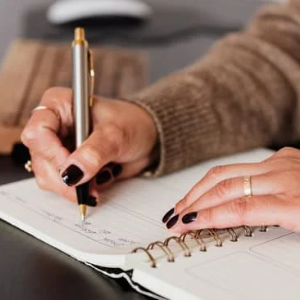
I started by getting a blank notebook and writing down all the harsh things I said to myself as soon as they came to mind. Then, when I didn’t have my notebook, I would write my self-evaluations and criticisms on scraps of paper, receipts, and paper towels. I even texted and emailed them to myself. Once I realized how mean I was to myself and why, I knew I had to change to feel better.
I began to see a pattern. I would be mean to myself when I felt overwhelmed, embarrassed by a mistake I made, when I messed up as a parent, or didn’t finish something I started. I always yelled at myself for what I thought were my mistakes. The reasons were always the same, even though the situations were different. I also realized I would get angry about things I couldn’t change. So, I knew I had to let them go if I wanted to get better.
I found solutions to some of my biggest problems, like how to hang a hook next to my garage door so I wouldn’t keep losing my keys. That stopped me from saying how messy I was and how I didn’t have it together because I always lost my keys. It was a big wake-up call for me to see that there were real reasons why I was being mean to myself.
I didn’t clean out my pantry or closets like so many others did during the pandemic. But I discovered how to stop talking so badly to myself and bullying myself, which is worth all the messy closets and dirty pantry’s in the world to me.

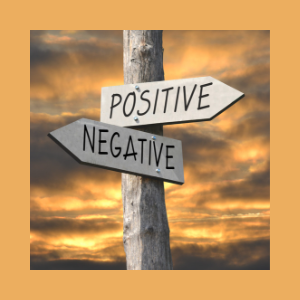
How to take your negativity and make it positive.
Tips to use daily to stop your negative self-talking:
Find your triggers.
There may be times when your negative self-talk is automatic. It could happen on a holiday or at work or school. If you can figure out what you tell yourself and when you do it, you can be ready to stop.
Pay attention to how you feel.
Don’t talk to yourself when something terrible is happening, or you’re having a bad day. Things will only get worse from here on out. Write down the “whys” of what you’re going through instead.
Find the funny side.
Laughing can make you feel less anxious and tense. So find things that make you laugh, like a comedian on Netflix, a funny podcast, or America’s Funniest Videos (AFV) (works for me.). Spend your time with people who bring you joy. Whether you know it or not, you can pick up on what other people think and feel. So, spending time with friends and family who make you laugh and don’t bring drama is essential.
Look for happiness outside of yourself.

Sometimes, seeing words or pictures of hope is all it takes to change your mind. So put reminders in your office, at home, and anywhere else you spend a lot of time.
Speak to yourself like you would a friend.
We are all much harder on ourselves than we would be on other people. We put a lot of pressure on ourselves to be perfect, and when we mess up, we are very self-critical.
Think about what you would say to a friend who was going through the same thing you are, and use that as a guide for what you should speak to yourself. This is one way to be kind to yourself. What would you say to someone important to you? Are you ready to tell them what they did wrong and be critical? Or would you help them figure out what they could do to make things better? You could teach them how to find the good in everything.
More ways to stop being so hard on yourself:
- Think of three things you don’t like about yourself, or write down times when you felt like you failed. Then ask yourself, “If a friend told me this about themselves, what would I tell them?”
- The best way to ensure you’re giving this your full attention and not just rushing through it in your head is to write down your answers.
When things aren’t going well, it can help to say things like, “At least we had fun,” “It wasn’t a total disaster,” or “I learned something good about myself.” It will give you an immediate feeling of positivity. You will realize that you are not as bad as you think if you keep reminding yourself to shift from a half-empty glass to a half-full glass.
The Influence of Self-criticism.
Limited thinking: The more you tell yourself you’re bad or can’t do something, the more likely you are to believe it.
Difficulty in relationships: If you keep telling yourself you’re not good enough or can’t do something, you and your family and friends will start to believe it’s true.
Excerpt from headspace.com

Conclusion
If most of what you say to yourself is negative, you can teach yourself how to speak positive to yourself. But please remember that you must remind yourself more than once for it to stick.
You can make positive self-talk a habit. IF you catch yourself when you’re doing it.
At the end of the day, you are the only one who can cheer you on, help you make changes, and push you to succeed.
About Lighten the Heavy